Can Cologne or Perfume Help You In Your Video Meetings?
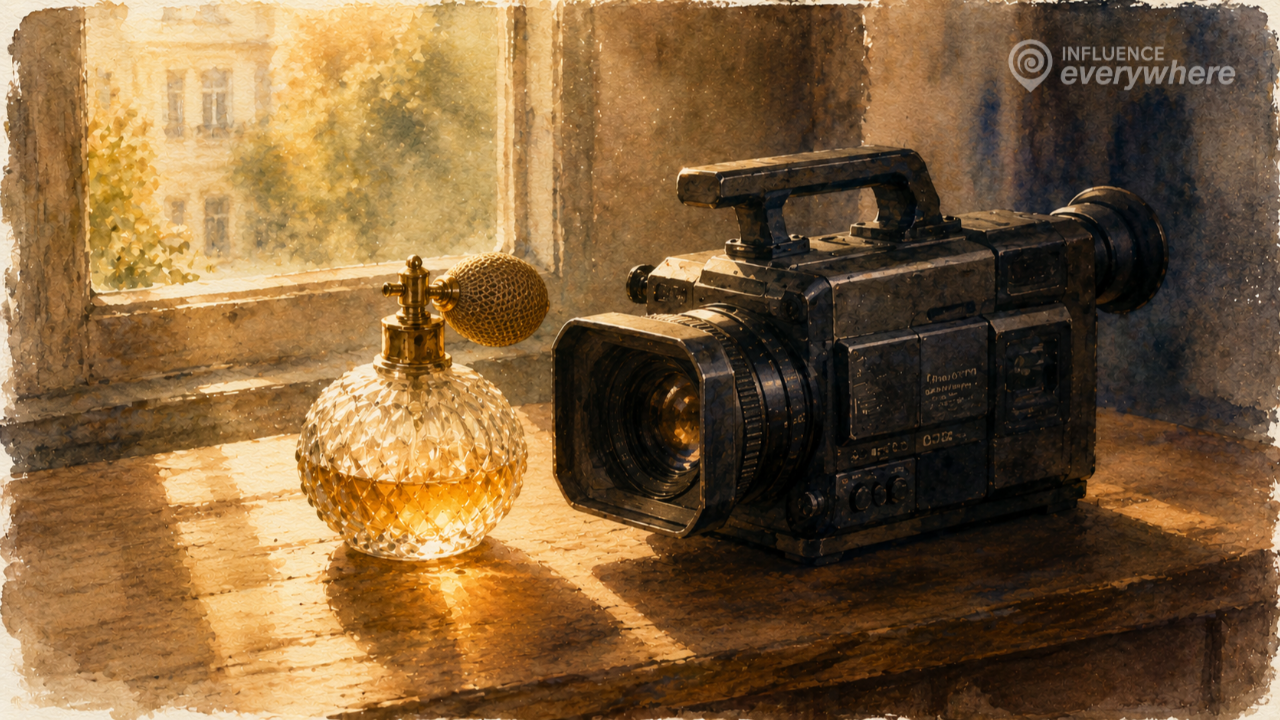
In 1987, Van den Berghe and Mace ran a study most people have never heard of. Two hundred women rated two hundred men on attractiveness... on video. The video recordings were made in advance. There was no scent transfer possible. No shared room. No live contact.
Half the men were wearing cologne when the recording was made.
Half were not.
The ones wearing cologne were rated more attractive.
The cologne never reached the women. So what happened?
The cologne worked on the men.
Their bodies registered the scent. Posture shifted. Voice settled. Face softened. The camera picked up the difference and carried it through to the screen the rater was watching, days or weeks later.
Your state shows up on camera before you do.
That is the lesson, and it is bigger than cologne.
Why state matters more than appearance on camera
We tend to think of "looking good on video" as a problem of lighting, framing, wardrobe, and posture. Those things matter, but they are downstream variables. The ups...
What Patients Confronting Death Taught Me and Why Influence Matters Now

For nine years, I ran a cardiac surgery unit. Before and after surgery, I cared for hundreds of patients facing the most consequential moments of their lives. All of them were confronting their mortality in one way or another.
They taught me something I didn't expect.
In the night before surgery - alone in the hospital room, or alone at home with their thoughts - people stripped away everything inessential. No performance. No professional self-presentation. Just what was actually on their mind.
And what was on their mind was almost identical, across every demographic.
Age, gender, race, religion, education, income — none of it predicted the content.
Every patient was thinking about the same three things:
God. Family. How they treated other people.
It is that third one that became, eventually, the reason I do the work I now do.
People at the edge of their lives reflect on their interactions. The small ones, often more than the big ones. The cashier they were short with. The coll...
Out of Sight, Out of Mind? or Out of Sight and Unforgettable? It Depends on How You Showed Up

We carry two proverbs that contradict each other.
Out of sight, out of mind.
Absence makes the heart grow fonder.
Most of the time, we just pick the one that's useful in the moment. The truth is, both are real... and which one applies to you, when you leave a room or a job or a life chapter, isn't decided by time. It's decided by how you showed up while you were there.
I learned this twice in a month.
The first lesson came in an email. The subject line was nothing memorable. The first line stopped me in my chair.
"Dear Dr. Tori, you don't know who I am. Eight years ago, I was sitting in the corner of a room when you gave a talk at a lunch and learn."
She went on to tell me, in specific detail, what that talk had meant to her in the eight years since. Every few weeks, she said, something from it surfaces.
I remembered the talk. Forty people, fluorescent lighting, the kind of midday session you do without expecting much.
I had no idea she was in the room.
The second lesson came...
The Slippery Slope That Actually Is One: How "Just This Once" Sabotages Behavior Change

Most behavior change advice gives you a system. A morning routine. A 30-day challenge. An app. A tracker. A coach.
I'm going to tell you something smaller... and far more useful.
Almost every behavior change failure I've had in my life started in exactly the same place.
Not with a giving-up moment.
With a deal.
"I'll skip just this one walk."
"I'll start the diet after the trip."
"I had a long day. I deserve this."
The deal sounds reasonable. It sounds generous. It sounds like something a balanced, non-rigid person would say to themselves.
It is none of those things.
It is a concession. And the moment you make one, your resistance to the next one drops.
There's a phrase from logic called the slippery slope fallacy - the idea that one small thing will inevitably lead to a much bigger thing, used to dismiss any argument someone doesn't like. Skeptics throw it around constantly.
With behaviors, the slope is not a fallacy. It is documented in the literature. Small concessions s...
Why You Can Pitch To A Zombie Better Than To Your Own Team

There's a board game called Snake Oil.
You get a hand of cards with random nouns on them. Friend. Blanket. Hammer. Telescope. Pillow. Mirror.
Each round, one person becomes the buyer — they get a character card. A diva. A zombie. A kindergartner. A pregnant woman. A ninja. A samurai.
Everyone else combines two of their nouns into a product and pitches it to the buyer. The best pitch wins.
My kids won't play it with me anymore. They said it wasn't fair. I do this for a living.
So I made a deal: I'd teach them one persuasion pattern before each round, then we'd play. Then I'd teach another. Then we'd play again.
That's how the Snake Oil workshop was born.
I now run it for organizations. Hospitals, law firms, leadership cohorts, risk management teams. It is one of the funniest two hours I get to spend in my work. But the laughter is not the point.
The point is this.
The First Round Is Already Astonishing
The first time I ran Snake Oil with adults - before I taught them a single ...
5 Questions I Use AI to Deepen Rapport with Audiences in My Speaking
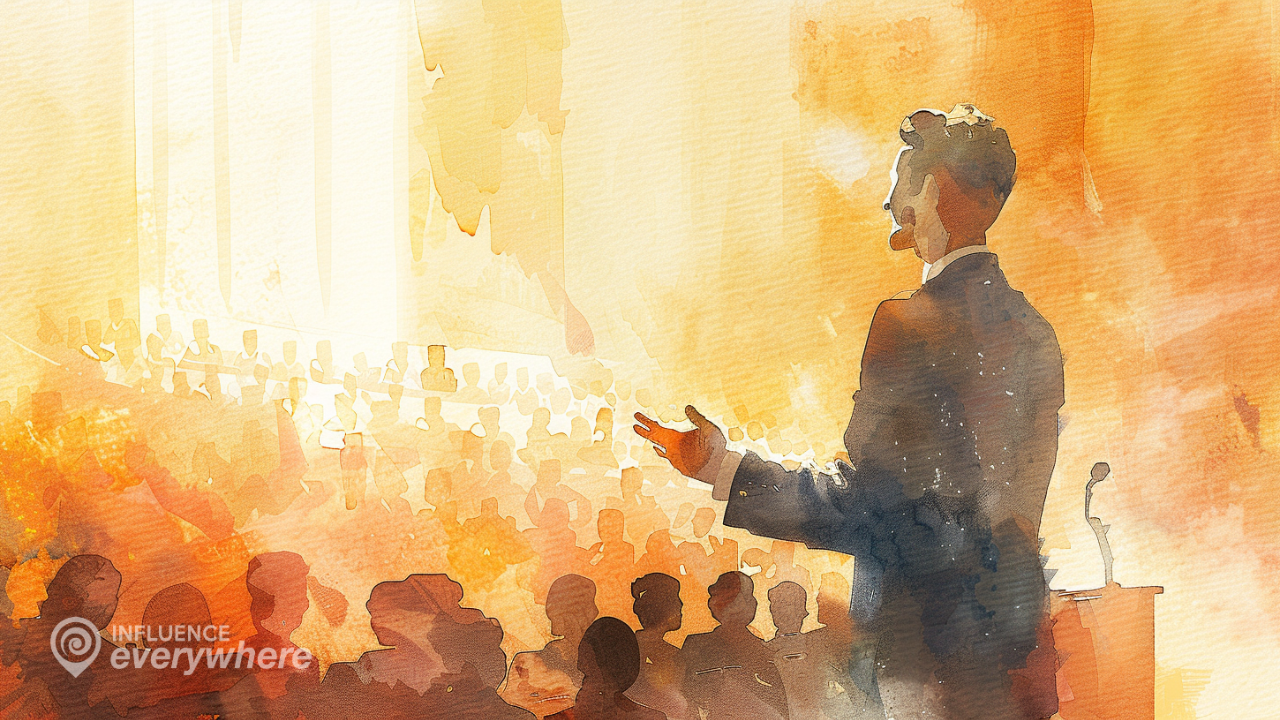
"You're a phenomenal public speaker. But you're even better at the Q&A afterwards." (Because I spend more time on preparing for the audience than I do on preparing the talk)
I'm a physician and a hypnotherapist. I teach at Georgetown. I run a company called Influence Everywhere. Most of what I do for a living is help people who do good in the world get better at moving others... through influence, communication and connection.
I do a ton of public speaking. And before I get in front of those rooms, I run five AI prompts.
Here they are:
1. Build me a glossary of the language this audience uses.
I ask a generative AI tool for 70 to 75 terms - words, phrases, and acronyms - with brief definitions. Even when I think I know an audience, I find distinctions I would have missed. (I went into a talk for palliative care providers thinking I understood the spectrum of palliative care. I did not.) Misusing a word an audience uses costs more rapport than not using it at all.
2. List the curr...
Why Stepping Away Is the Most Efficient Next Step

The Subconscious Simmer™, explained
You arrive at your destination and you cannot remember the drive.
You finish a chapter and realize you have no idea what just happened around you for the last forty minutes.
You stand under the shower and the answer to a problem you've been chewing on for two weeks suddenly arrives, fully formed, like it was waiting for you to stop trying.
These aren't unrelated.
They are all the same thing... and that thing is one of the most underused tools in modern professional life. I call it the Subconscious Simmer.
What is the Subconscious Simmer?
Your brain has two working modes.
The first is the conscious flashlight. Narrow. Focused. Holds about five or six things at once. This is what you use to read this sentence, drive a car in traffic, run the meeting, build the slide deck. It is high-effort and low-bandwidth.
The second is the subconscious room. Wide. Quiet. Holds essentially everything you have ever taken in. It runs in the background, looking...
The Two-Do List: A Better Way to Sort Your Tasks (and Manage Your Mood)

There's a task on your list right now you've been dragging for two weeks. Maybe two months. Every time you see it, something in your chest tightens, you think I'll get to it, and you move on to something easier.
That task is doing something most productivity advice misses.
It's not just sitting on your list. It's changing your state - the mood, energy, and posture you bring into every room you walk into. The dread leaks. Into dinner. Into how you respond to your spouse. Into the email you'll send tomorrow morning that's slightly shorter than you intended.
Most productivity systems try to help you grind through that task faster.
That's the wrong move.
The right move is to sort your list differently.
Step 1: The Brain Dump
Get alone. Close the door. Write down everything you have to do - home, work, family, projects, health, side things, the items you've been meaning to handle for a year. One page. One mind map. Whatever your tool is.
This is non-negotiable. You can't sort what y...
What Body Language Actually Tells You (And What It Doesn't): The Clever Hans Lesson

Most of what you've been taught about body language is wrong.
Folded arms doesn't mean defensive. Broken eye contact doesn't mean lying. Pursed lips doesn't mean hiding something. The "X equals Y" approach to reading people... the one you'll find in airport bookstores and viral threads... is comfortable, repeatable, and dangerously misleading.
There's a better way. And a horse named Clever Hans showed us how more than a century ago.
The horse who could do math... well, or so they thought
In 1907, in Berlin, a horse named Clever Hans got famous for doing arithmetic. His owner, Wilhelm von Osten, would pose a problem (basic addition, simple multiplication, sometimes historical questions with multiple-choice answers) and Hans would stomp out the correct response with his hoof.
People assumed it was a trick. The owner must be signaling. Scientists tested it. They brought in different questioners. They changed the format. They varied the topics. Hans kept getting answers right.
It was...
(Sometimes) Face the Problem by Not Facing the Person: Difficult Conversations

Most of the advice you've read about difficult conversations is wrong about one thing. Not wrong in general - wrong in the specific moment when you need it most.
That thing is eye contact.
Conventional wisdom says to lean in. Make eye contact. Hold it. Show you're present. And in the vast majority of conversations, that is solid advice. I teach it. I use it.
But there is a specific category of conversation where it backfires completely... and if you're a leader, a physician, a risk manager, or anyone who has to have hard talks with people who are hurting, you need to know when that category applies.
The Stuck Conversation
A client of mine - a rising CEO recently brought in to scale a nonprofit - called me for help. The founder of the organization had stayed on staff in a scientific and technical role. He had built the place. He was losing it. Not to incompetence, but to the natural ceiling of his own skill set. The board knew it. Everyone knew it. He knew it.
He was not handling ...
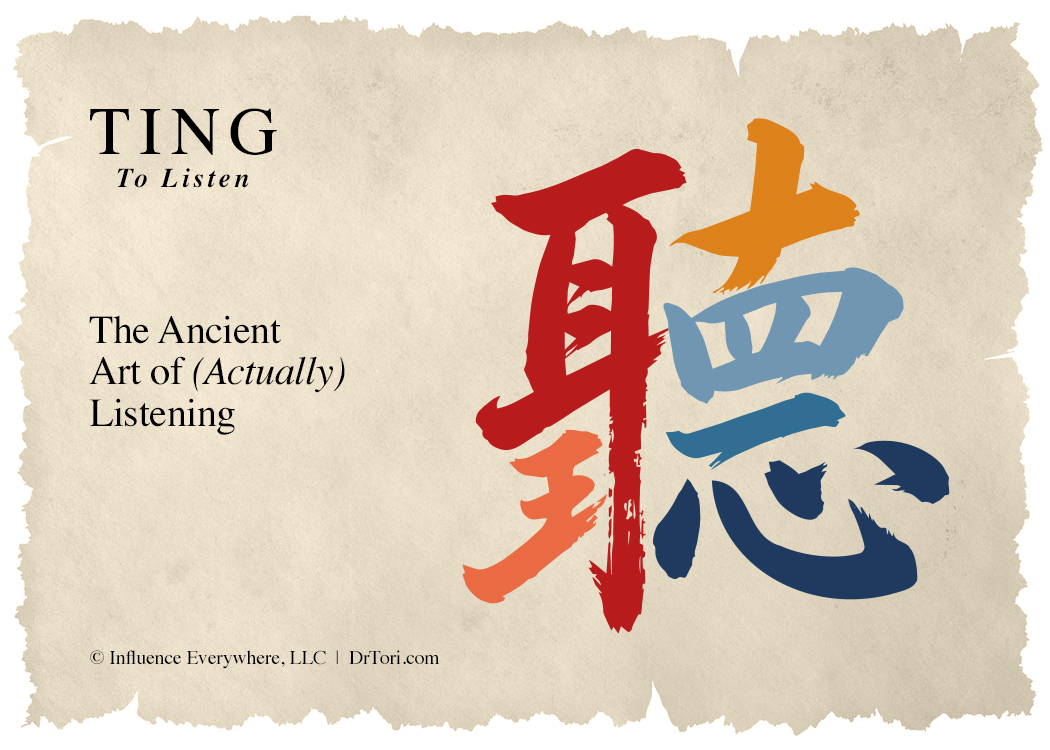
What's Your Listening Score?
How well do you listen?... like actually listen? This one word will change every interaction you have from now on. See where you stand...
Get Your Conversation Score
How well do you navigate conversations? Struggle with small talk? Fumble the greeting? Find out...

What Are Hypnotic Gifts?
You can transform someone's life in a single conversation. In his new book, Dr. Tori gives you the map.
