What Patients Confronting Death Taught Me and Why Influence Matters Now

For nine years, I ran a cardiac surgery unit. Before and after surgery, I cared for hundreds of patients facing the most consequential moments of their lives. All of them were confronting their mortality in one way or another.
They taught me something I didn't expect.
In the night before surgery - alone in the hospital room, or alone at home with their thoughts - people stripped away everything inessential. No performance. No professional self-presentation. Just what was actually on their mind.
And what was on their mind was almost identical, across every demographic.
Age, gender, race, religion, education, income — none of it predicted the content.
Every patient was thinking about the same three things:
God. Family. How they treated other people.
It is that third one that became, eventually, the reason I do the work I now do.
People at the edge of their lives reflect on their interactions. The small ones, often more than the big ones. The cashier they were short with. The colleague they didn't make room for. The conversation they never quite repaired.
If that is the thing we will reflect on, then the work is to get good at it now — before the reflection becomes a regret.
That is the first reason influence matters now.
There are two more.
The world is changing faster than we can keep up
Business models, care models, the cost of money, the shape of work, where people live, what borders mean — all of it is in motion. Technology especially. AI has not arrived as a wave. It has arrived as a tide.
In a world like that, the rational move is to invest deeply in the thing that doesn't change.
How to move people hasn't changed in thousands of years.
How to make someone feel safe. How to ask a question that opens. How to disagree without diminishing. How to be present in a way that registers.
The Stoics worked on this. The prophets worked on this. The best person you've ever worked for works on this.
The skills compound across decades. They survive every platform change, every technology cycle, every shift in market conditions.
Get really good at what doesn't change. That is the bet.
As everything goes virtual, we will thirst for what is human
The second consequence of the speed of change is downstream of the first.
The more of our lives that go digital, artificial, virtual — the more we will crave the opposite.
You can feel it already. The slight flatness of yet another rectangular video meeting. The careful, AI-assisted email that says almost nothing. The growing sense that something is being subtracted from the rooms we used to share.
There is going to be an enormous premium, over the next decade, on the people who can actually be with another human being. Listen. Notice. Stay present. Move someone gently toward what is good for them.
This is not a soft skill. This is going to be the most strategically valuable skill in your professional life.
Most of us are winging it
Here is the third reason.
We walk into the most consequential conversations of our quarters without a plan.
We rehearse a surgery. We rehearse a flight. We rehearse a keynote. But the meeting where the project actually gets decided? The conversation with the partner we love but haven't really talked to in three weeks? The check-in with the team member who is quietly disengaging?
We wing it.
We have no plan for the state we want to be in. No plan for the frame we want to set. No plan for the context we are walking into. We just show up.
And then we wonder why our results in the most important domains of our lives are uneven.
The good news is that being deliberate is not a course. It is not a coaching engagement. It is five minutes before the meeting.
Three questions, asked in the car or the hallway:
- What state do I want to be in when I walk in?
- What does this person need to feel before they can hear me?
- What do I want to leave them with?
That is the smallest possible version of deliberate influence. Done consistently, it is what separates the people we describe as "naturally good with people" from the rest of us.
(They are not naturally good. They are deliberate.)
The whole thing in one sentence
If the way you treat people is what you'll think about at the end…
If how to move people hasn't changed in thousands of years…
If the world is about to ache for the deep human-to-human connection we are quietly losing…
Then the work is to get really good at it. Now.
That is why I do what I do. And that is why I think it matters more now than at any point in my career.
STOP reacting! Be Deliberate Instead...
If you’re busy and you want to have incredible success in your career and at home, then take a page out of your Influence Playbook. No more winging it. No more just going through the motions. And no more trying to control things (or people) you can't control.
Instead, control the controllables with The Influence Playbook:
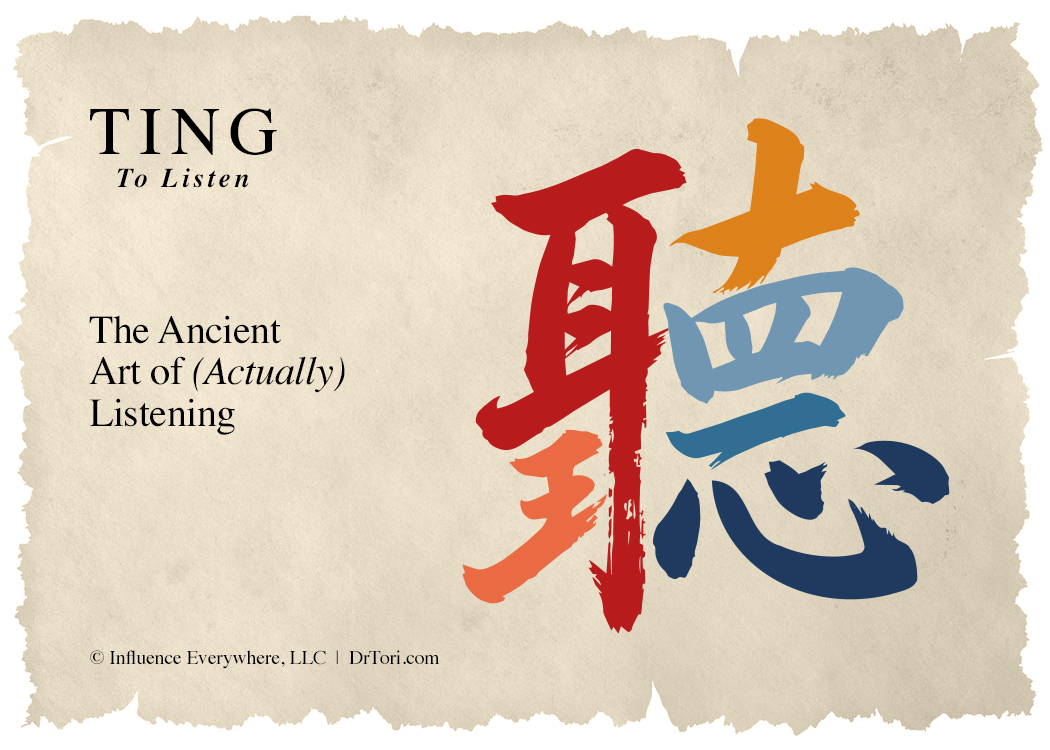
What's Your Listening Score?
How well do you listen?... like actually listen? This one word will change every interaction you have from now on. See where you stand...
Get Your Conversation Score
How well do you navigate conversations? Struggle with small talk? Fumble the greeting? Find out...
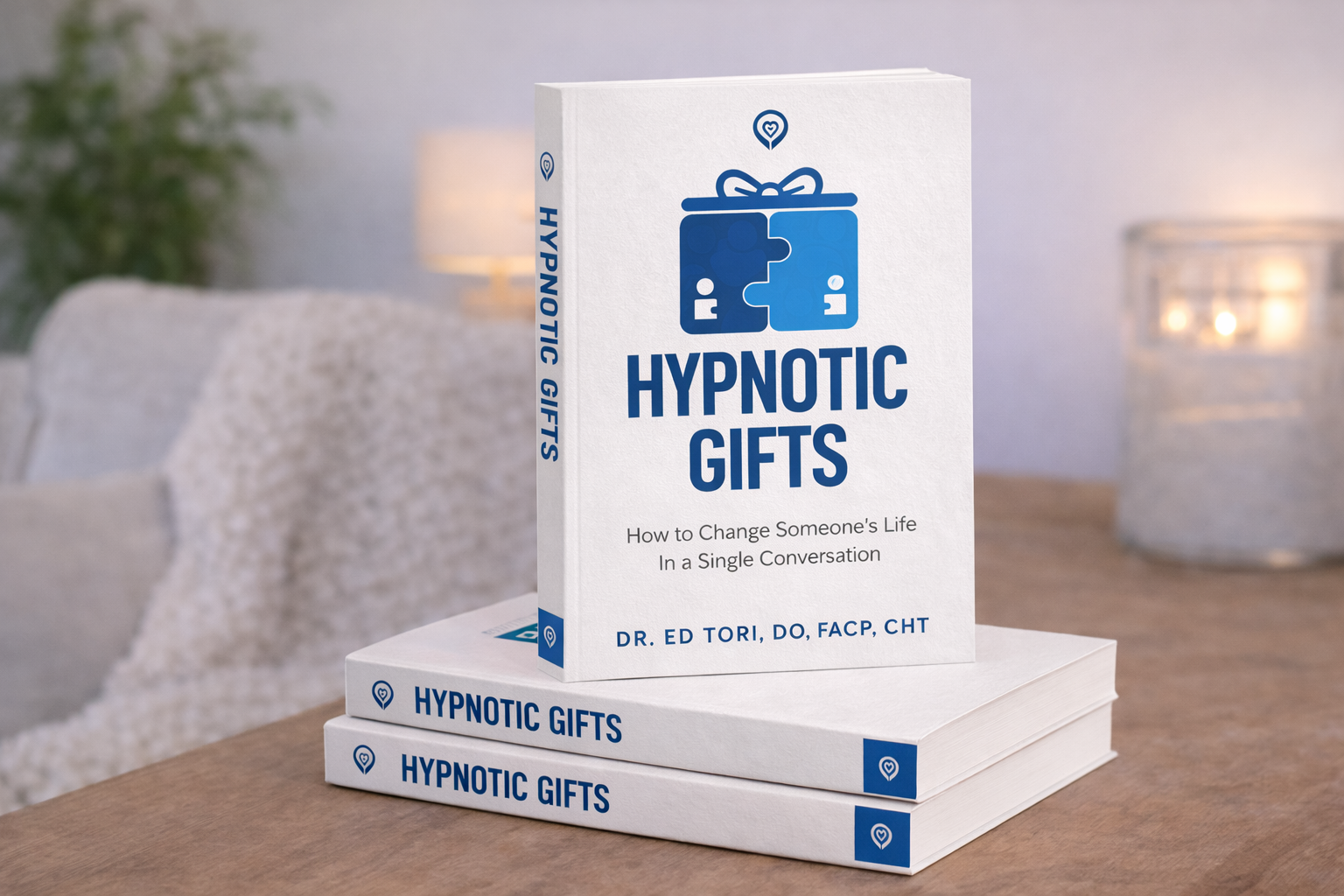
What Are Hypnotic Gifts?
You can transform someone's life in a single conversation. In his new book, Dr. Tori gives you the map.
