Don't Help Them Move On. Help Them Move With.

When someone has lost a loved one, our reflex is to help them move on. Forget. Distract. Get back to normal.
Time heals, we say. They would want you to be happy. Focus on the good memories.
None of it is wrong. Almost none of it is the most useful thing we can offer.
The most useful thing... and I am saying this both as someone who has coached people through grief for years and as someone who lost his mother a year ago... is not to help them move on.
It is to help them move with.
The difference
Moving on puts the lost one further behind us. It treats grief like a wound that should close.
Moving with takes what the lost one gave the world — a trait, a way of being, a kindness, a posture — and carries it forward.
Loss doesn't become a closed door. It becomes a door reopened by your own action.
The pattern (five moves)
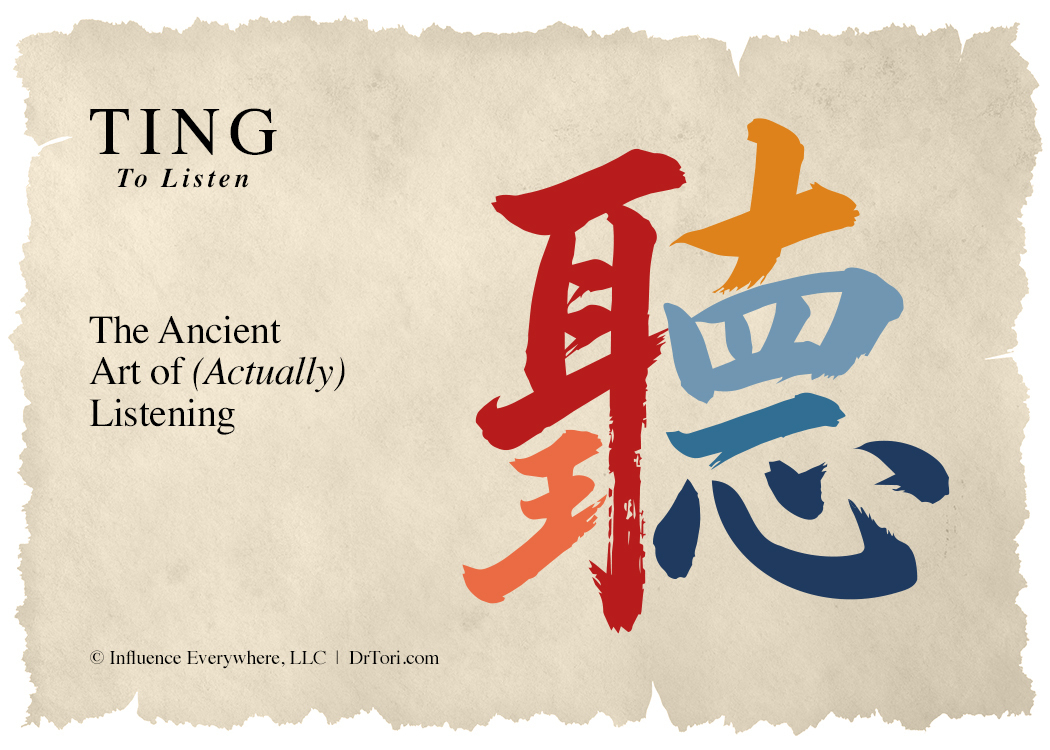
1. Listen wholly. Not posture-listening. Whole-body listening. The Mandarin word for this is TING, and the pictograph maps to six channels — the ear, the eye, the mind, the heart, the focus, the presence. You cannot fake this. They feel the difference.
2. Wait for the permission signal. This is the move most listeners miss. Signals are quiet — a breath after a long sentence, a shift from facts to story, a positive trait surfacing in the middle of a thought. When you catch one, slow down. Don't barrel through.
3. Honor the trait. When they name a trait, sit with it. That's beautiful. She must have had a lot of impact on people. Don't redirect. Don't make it about you. The honoring is the gift.
4. Invite the reframe. Once they've expanded on the trait, gently ask: "If you started doing some of what she did… what would that look like in your week?" Their head moves somewhere new. Toward the loved one, not away.
5. Respect rejection. If they pull back from the question, drop it. Don't push. The invitation only works when it's wanted. Sometimes it lands days later anyway.
Why it works
What we love about someone is almost never their existence as a body in a room. It is the way they laughed. The way they put others first. The way they noticed the quiet one in the corner. The way they showed up for a neighbor.
Those things don't have to leave when they do.
Loss becomes legacy when the trait keeps walking around in the world.
Try it
If someone in your life has lost someone (recent, old, or one they don't talk about much) try some variant of this question:
"What would it look like if you put a little more of them in your day?"
Then wait. Don't fill the silence.
The lost become found in that silence.
STOP reacting! Be Deliberate Instead...
If you’re busy and you want to have incredible success in your career and at home, then take a page out of your Influence Playbook. No more winging it. No more just going through the motions. And no more trying to control things (or people) you can't control.
Instead, control the controllables with The Influence Playbook:
What's Your Listening Score?
How well do you listen?... like actually listen? This one word will change every interaction you have from now on. See where you stand...

Get Your Conversation Score
How well do you navigate conversations? Struggle with small talk? Fumble the greeting? Find out...
What Are Hypnotic Gifts?
You can transform someone's life in a single conversation. In his new book, Dr. Tori gives you the map.
