Actions Think Louder Than Thoughts: Why Behavior Reshapes Belief Faster Than Mindset Does
If you've spent any time in personal development, you know the standard sequence:
Change your thoughts → Change your actions → Change your life.
It's clean. It's quotable. It fits on the graphic.
And it's only half true.
The other half — the half that doesn't get printed on inspirational posters — is that behavior is upstream of feeling, and feeling is upstream of thought. Which means most days, the fastest way to change a thought is to change a behavior first and let the mind catch up.
This is the more useful half, especially if you do influence work, lead teams, or coach high performers. Here's why.
William James Saw This Coming in 1899
In one of his most quoted lines, psychologist and philosopher William James wrote:
"Action seems to follow feeling, but really, action and feeling go together. By regulating action, which is under our direct control, we can indirectly regulate feeling, which is not."
That sentence has a lot of mileage in it.
The will moves the action. The action moves the feeling. The feeling moves the thought.
Behavior is the lever that's always within reach. Thought and feeling are reachable too (with training, technique, and practice), but behavior is the one you can count on without needing to already be in the right state to access it.
Most days, the body is the faster way in.
The Research Quietly Agrees
Leon Festinger built a whole social psychology on the back end of this with cognitive dissonance. When we take an action that's a little ahead of who we currently are, the mind quietly retools its beliefs to match the action.
Robert Cialdini formalized a related principle in Influence: The Psychology of Persuasion — commitment and consistency. Once we start walking a path, even casually, our beliefs migrate to defend the path.
Charles Duhigg, in The Power of Habit, mapped how behaviors form before identity hardens around them.
The body-language literature points in the same direction. Standing differently changes how confident you feel. Slowing your exhale changes your arousal. A gentle smile tilts your mood. (Some of the splashier original claims have been pushed back on in replication, especially the hormonal claims in the power-pose work. The felt-confidence finding (that standing differently changes how you experience yourself in the next ten minutes) has held up better. The durable story isn't behavior is magic. The durable story is behavior is the faster lever for feeling, and feeling is upstream of belief.)
97 Out of 101
I keep a working list called 101 Ways to Manage Your State. I didn't notice the pattern until I counted it after the fact.
Ninety-seven of the entries are not thoughts.
They're behaviors. Things you do with your body, your breath, your environment, your phone, your feet.
That ratio isn't an accident. State changes through the body faster than it changes through reasoning. Almost always.
What This Means Practically
If you're stuck waiting to feel confident before you act confident, you'll be stuck a long time.
If you're waiting to feel ready before you start, you'll be waiting longer than that.
There is no version of you in the future who is spontaneously going to feel ready. Ready arrives after the action. Not before it.
The most reliable intervention I know — for me, for coaching clients, for the leaders and clinicians I've worked with — is some version of this:
- Pick the smallest behavior that wouldn't require permission from your head.
- Do it.
- Notice what changes in the next ten minutes.
That behavior might be a posture, a breath, a walk, a glass of water, a text to a specific person, or the first ninety-second version of the conversation you've been postponing for ninety days.
It is almost never a mindset shift.
Why This Sits at the Center of the 7 Simple Rules
In the 7 Simple Rules of Influence I teach, the first rule is Manage your state. The seventh is Manage your action.
State and action are the bookends. Same hand. Both ends of the work.
You don't think your way into a different state. Most days, you behave your way in. Then the thought arrives, slightly late, and takes credit.
Let it.
Try This This Week
Pick one thing you've been waiting to feel ready for. The call. The note. The conversation. The first draft.
Do the smallest possible version of it.
Don't negotiate with your head first.
Move first.
Then notice what your mind quietly does to catch up.
That's the back door to belief. Most days, it's faster than the front.
STOP reacting! Be Deliberate Instead...
If you’re busy and you want to have incredible success in your career and at home, then take a page out of your Influence Playbook. No more winging it. No more just going through the motions. And no more trying to control things (or people) you can't control.
Instead, control the controllables with The Influence Playbook:
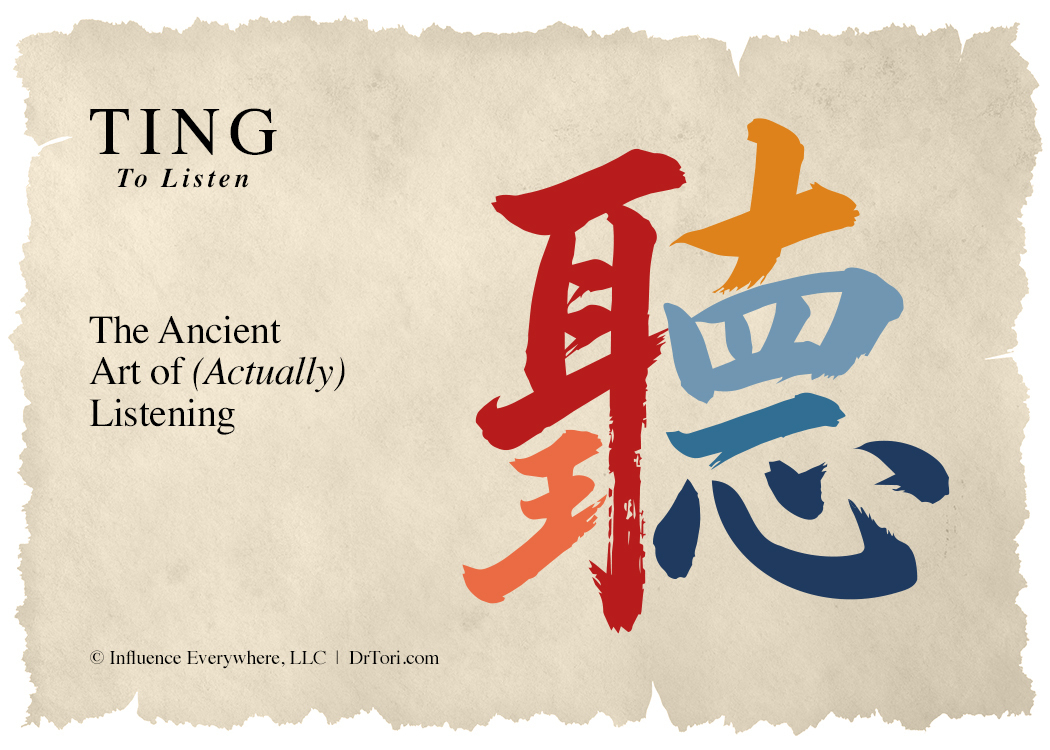
What's Your Listening Score?
How well do you listen?... like actually listen? This one word will change every interaction you have from now on. See where you stand...
Get Your Conversation Score
How well do you navigate conversations? Struggle with small talk? Fumble the greeting? Find out...

What Are Hypnotic Gifts?
You can transform someone's life in a single conversation. In his new book, Dr. Tori gives you the map.
